A Big Customer Just Asked for Your Emissions. Here’s What They Can (and Can’t) Demand.
Since March 2026, EU rules cap what large customers can require from smaller suppliers. Most SMEs answering carbon questionnaires don’t know this yet.

On this page
The email usually arrives from procurement, not sustainability. A large customer needs your carbon emissions data for their own reporting, there is a questionnaire attached, and the deadline is uncomfortably close. Through 2024 and 2025 these requests grew steadily longer, and smaller suppliers were quietly expected to produce numbers that would stretch a listed company's reporting team.
That era just ended, and surprisingly few of the businesses filling in questionnaires know it.
What changed in March
The EU's Omnibus directive, in force since 18 March 2026, rewrote the scope of CSRD, the regulation driving most of these requests. Two changes matter to suppliers:
- Far fewer companies now report. CSRD now applies to large companies with at least 1,000 employees and net turnover above €450 million. The wave is narrower than the one everyone planned for in 2024.
- A "value chain cap" now protects smaller suppliers. Companies that do report cannot require value-chain partners with 1,000 or fewer employees to provide more sustainability information than the EU's voluntary SME standard, VSME, sets out.
In plain terms: if you are under 1,000 employees, there is now a legal ceiling on what a CSRD-reporting customer can demand from you.
What VSME actually asks for
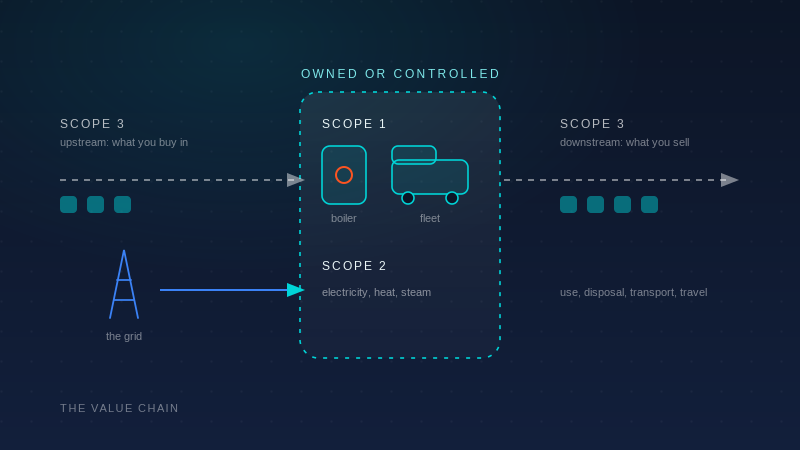
VSME is the European Commission's voluntary reporting standard for SMEs, designed exactly for this situation. Its Basic module covers the essentials: what your business does, its sites, workforce basics, and its energy use and Scope 1 and 2 emissions. A more detailed Comprehensive module exists for suppliers who want to go further, and that is where fuller climate information such as Scope 3 sits.
The practical beauty of answering in VSME shape is that you do the work once. The same structured answers serve every customer questionnaire, rather than each request triggering a fresh scramble.
Before you relax entirely
The cap is a ceiling, not a shield. Three honest caveats:
- UK suppliers are caught via their customers. The cap comes from EU law, and it protects you when the requester is CSRD-regulated. Requests driven by a customer's voluntary targets, or by UK SRS as it takes shape, sit outside it.
- Customers can still prefer suppliers with better data. Nothing stops a buyer choosing the bidder who turned up with clean, current numbers. The cap limits obligation, not competition.
- Scope 1 and 2 are now the unambiguous baseline. Whatever else is negotiable, metered energy, fuel and fleet emissions are in the Basic module. "We don't track that" is no longer a defensible answer for any supplier to a large customer.
What to do with the next questionnaire
- Check the ceiling before you commit. If you are under 1,000 employees and the request goes beyond VSME, you are entitled to push back, politely and with a citation.
- Get Scope 1 and 2 flowing continuously. It is the one ask that appears in every version of every questionnaire. Live data from your meters, fuel cards and fleet turns each request into an export rather than a project.
- Answer once, in VSME shape. Structure your data to the standard and the next request, whoever it comes from, is mostly done before it arrives.
The data-request fever of the last two years taught suppliers that carbon questionnaires are a cost of doing business with big customers. The rules have now been rebalanced in your favour. Know where the ceiling is, get the baseline flowing, and the questionnaires stop being a threat and start being a differentiator.
See Dashe in action
Book a demo and see how automated carbon data works for your business.
Book a demo